Córdoba’s most famous landmarks may be the Cathedral and the Roman Bridge, but I’ll start with Alcázar de los Reyes Cristianos, because while the famous history is important, the gardens at Alcázar de los Reyes Cristianos are just nicer for me.
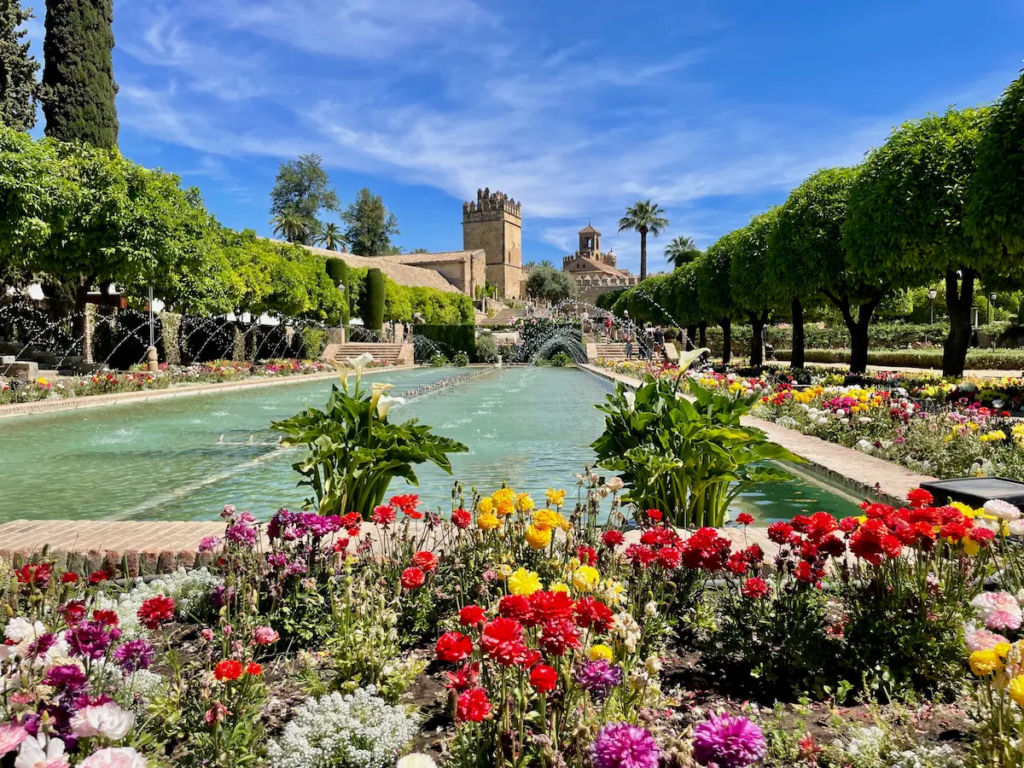
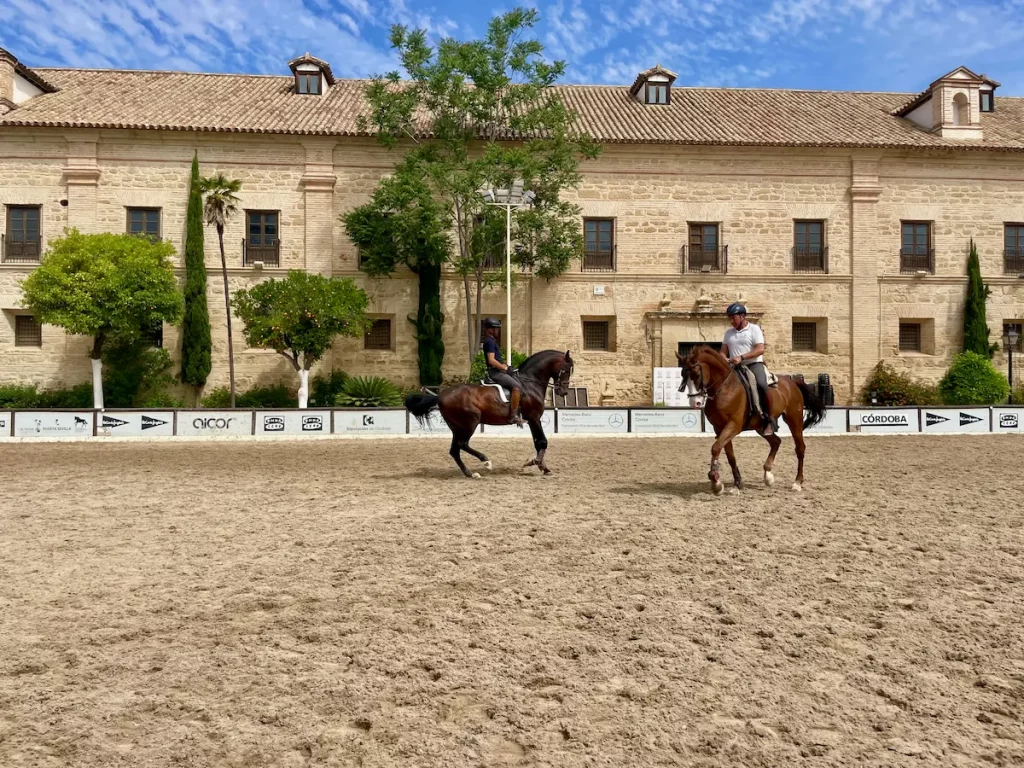
The entrance starts with a short museum, which did not impress me, but then there is a climb up to a not very high tower, which still offers a nice view of the bridge and the cathedral on one side and the gardens and stables on the other. There was even a horse show going on in the royal stables at the time, so you could watch it from there.
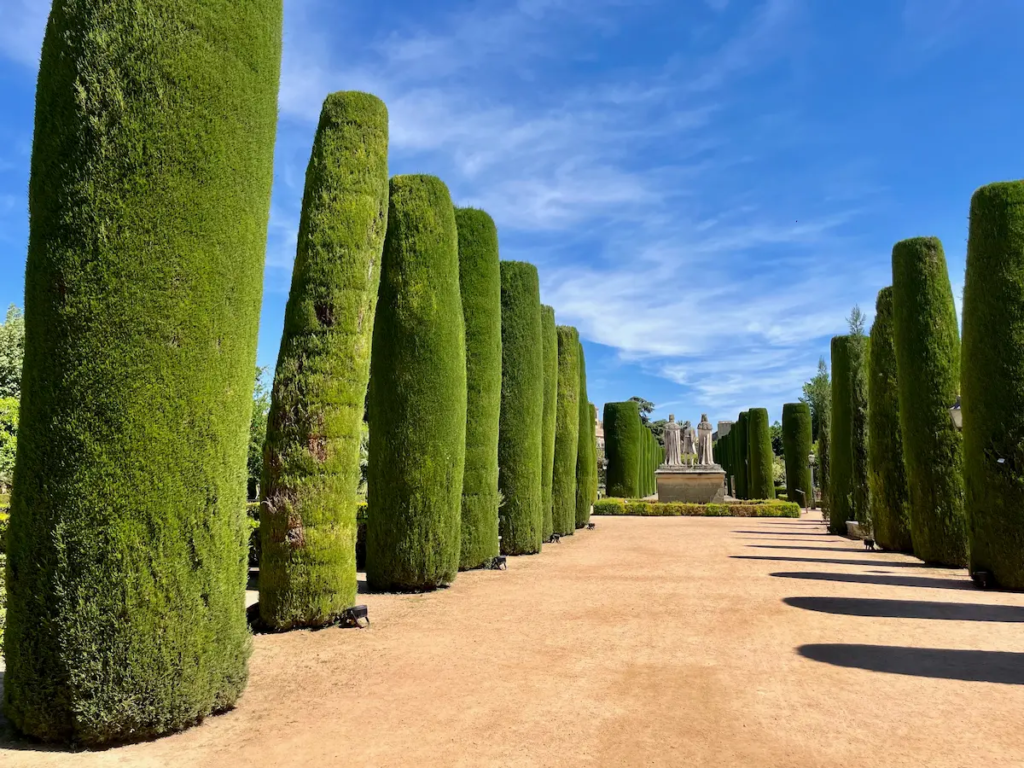
The gardens of Alcazar are beautiful. There are artificial water areas with fountains, decorated with flowers. Lots of different plants, a few statues and beautifully shaped cypress trees in tall cylinders.
Caballerizas Reales – Royal Stables
Founded in 1570 by King Philip II, the Pura Raza Española (Spanish Thoroughbred) was used to train Andalusian horses to the highest standards. In addition to a small museum, you can visit the stables and see horses in various stages of training. Yes, this place is still fully operational, with over 40 horses stabled and being trained. Be warned, it’s not open in the higher afternoon heat (it usually closes at 1 p.m., some days there are still evening opening hours from 7.30 p.m.) Admission is 5 euros. In the evening there are performances, so they are from 16 euros upwards.
Barrio San Basilio
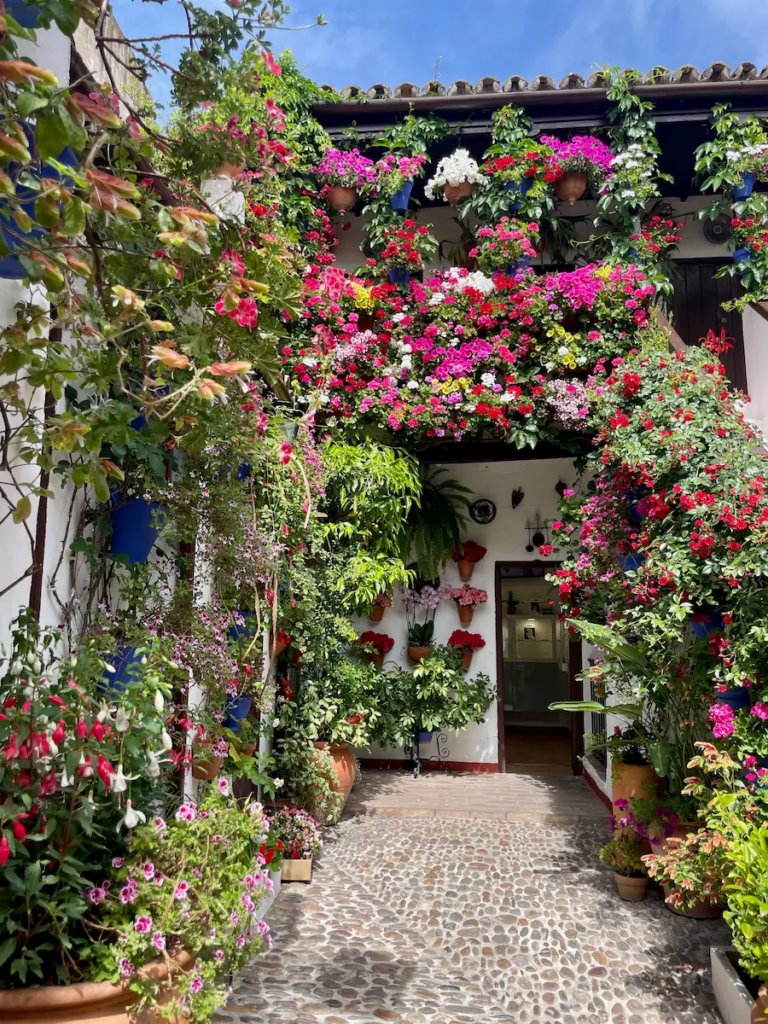
The quarter adjacent to the royal stables is San Basilio. It’s a really nice part of town and there are a lot of patios to see. As part of the Ruta de patio, you can buy a ticket for several patios here, but I find this unnecessary as there are hundreds of patios freely available throughout Córdoba. Some others are for a voluntary donation.
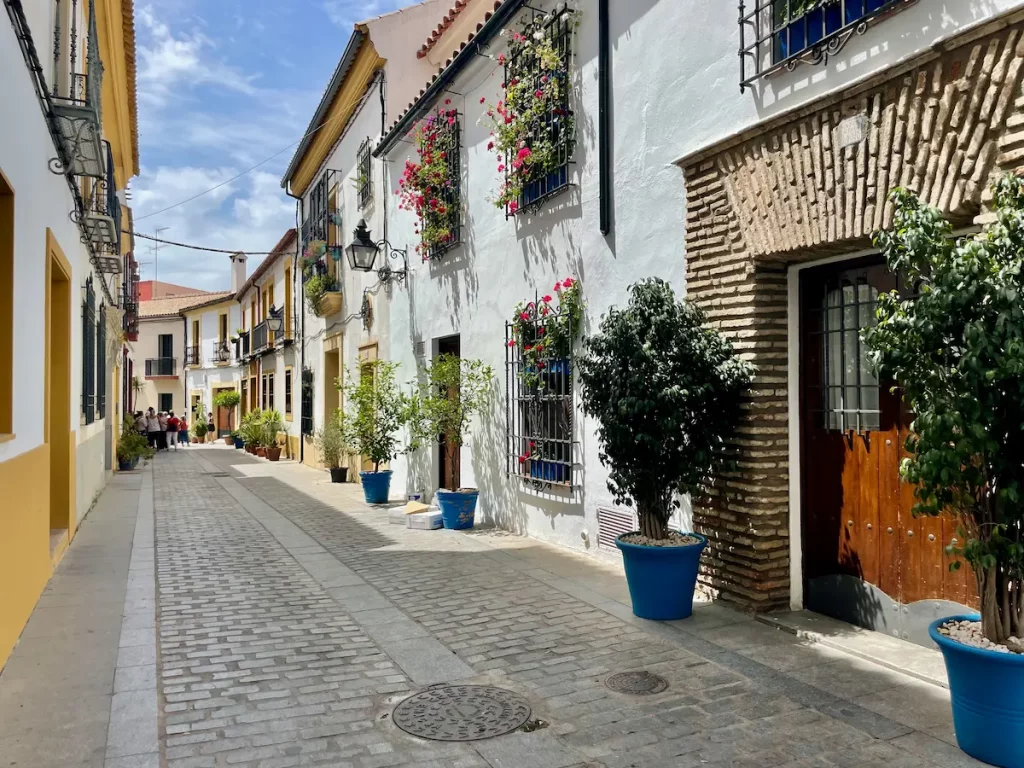
Anyway, this neighborhood is nice and quiet when you don’t meet a group of tourists. I also liked two nice places to visit here, Puerta Sevilla with outdoor seating and La Posada de Caballo Andaluz, a restaurant with a traditional menu.
Mezquita-Cathedral
Entrance to the cathedral is free from Monday to Saturday from 8.30am to 9.30am. Ironically, it even seemed to me that fewer people go there at that time than during the afternoon for 13 euros.
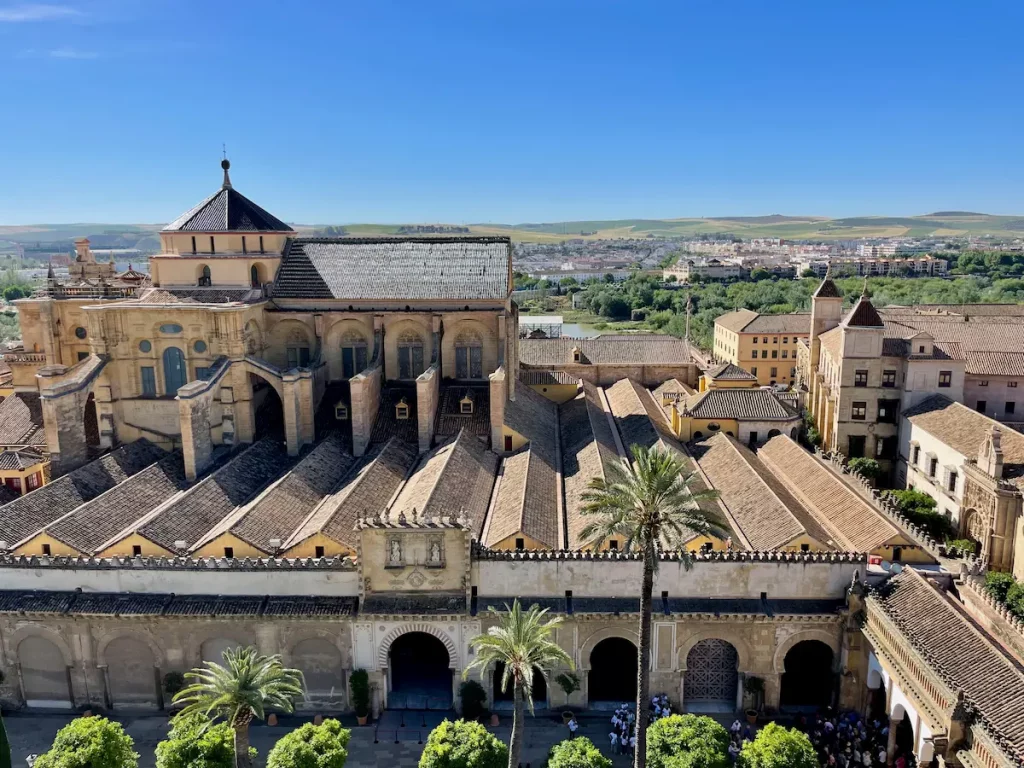
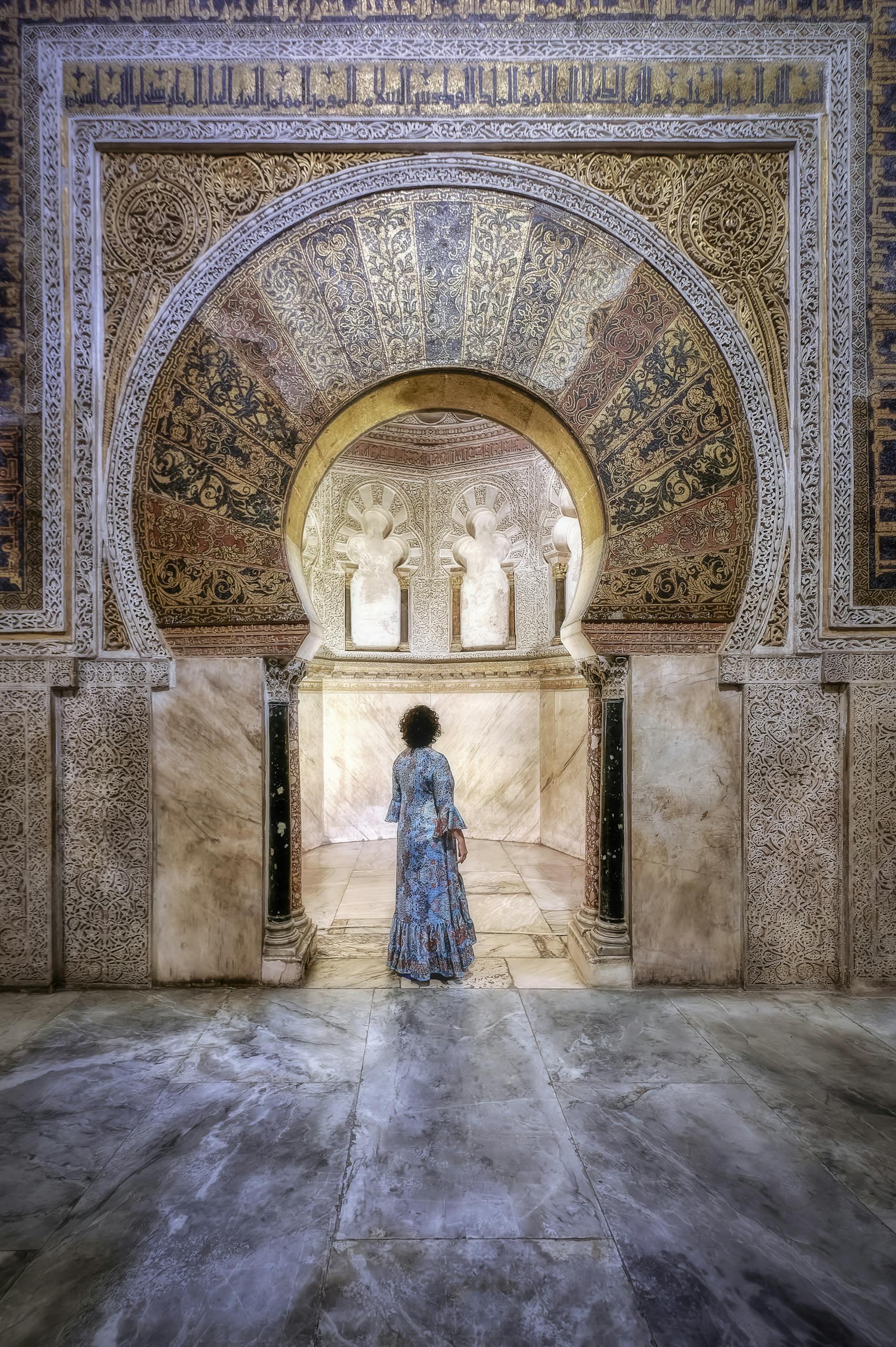
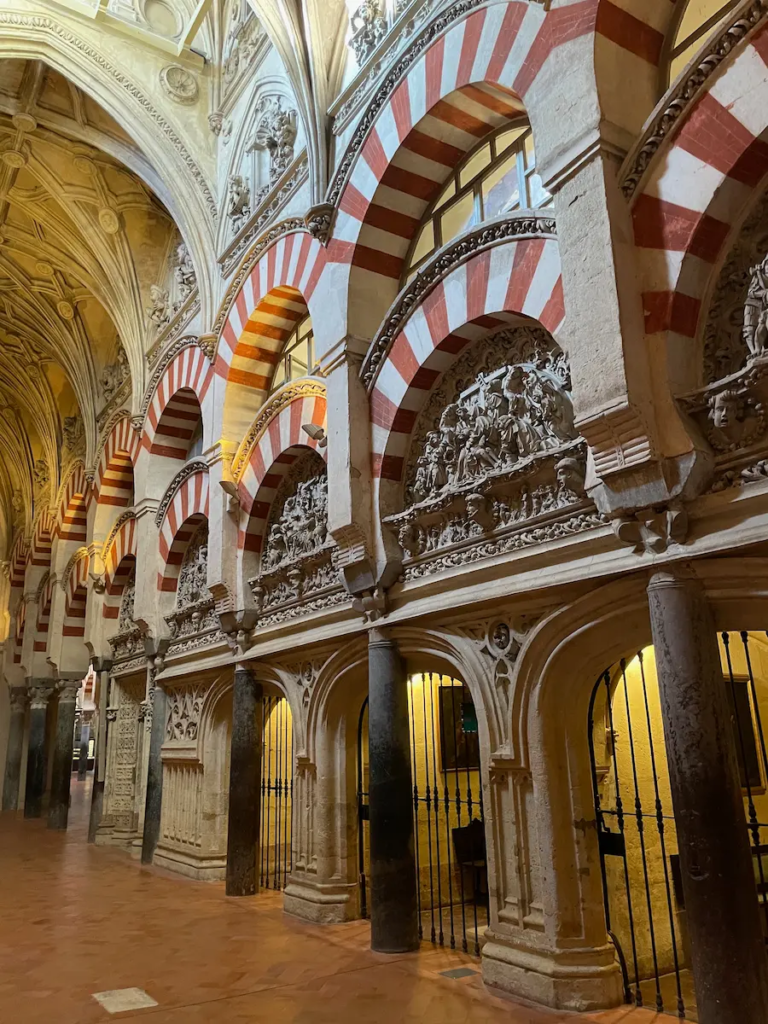
The cathedral is truly impressive inside, a huge space decorated with red and white striped arches, ornate ceiling, chapels, altars and statues. Even as a not-so-great fan of art, architecture and history, I almost spent the hour here.
Torre Campanario
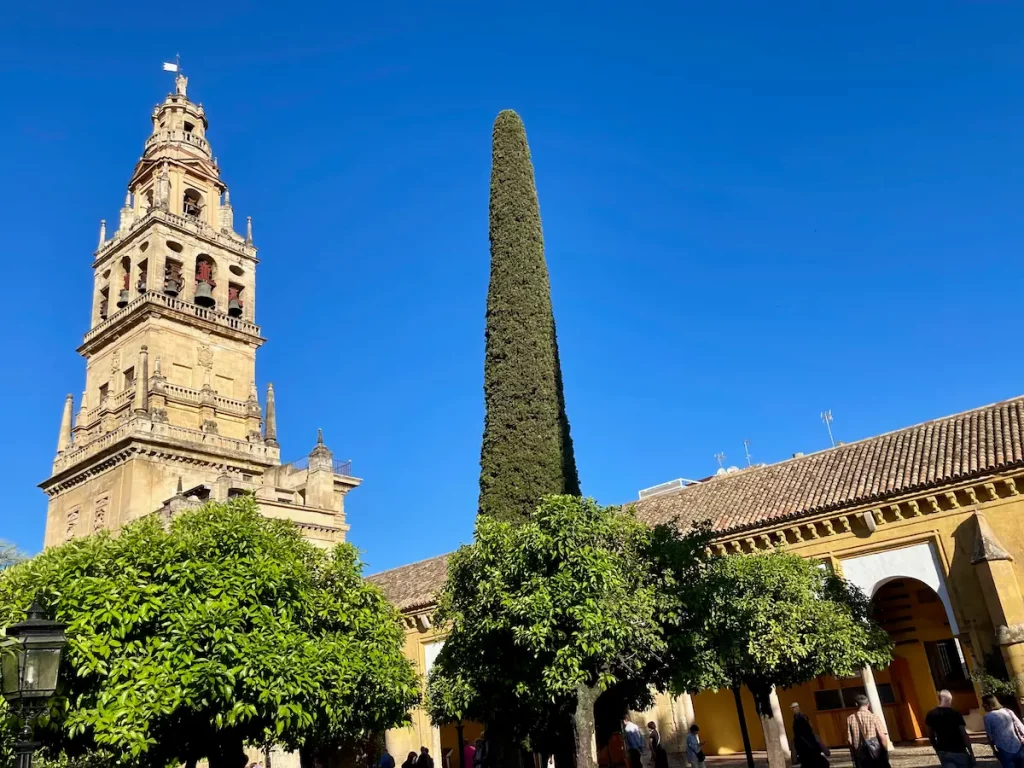
In the cathedral you can also take a lookout to the bell tower, Torre Campanario. The tower is not that high, only 54 meters and 191 steps. Still, better to plan for the morning when it’s cooler. It opens for entry every half hour from 9.30am and beware, in July and August it closes at 2.30pm (probably because it’s really hot). The entrance fee is 3 euros.
Calleja de las flores (flower alley)
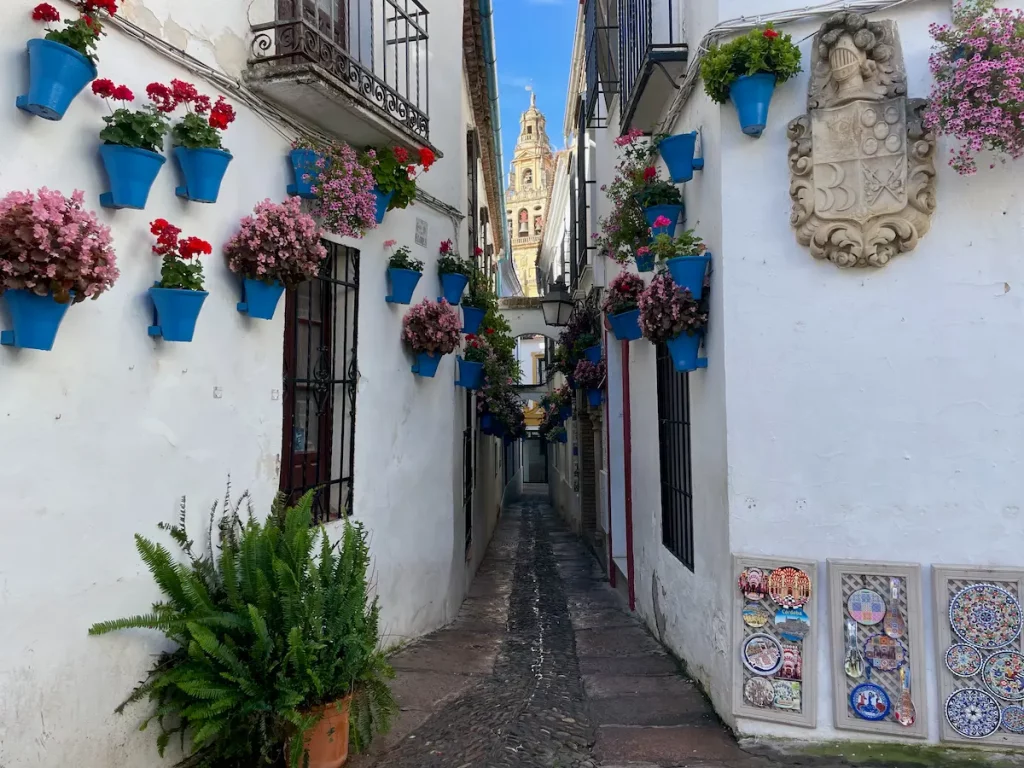
This short alley just a short walk from the cathedral (you can reach it along Velázquez Bosco Street) is beautiful in the same way that many of Córdoba’s other alleyways and courtyards are, with blue pots of flowers on the white walls of the houses. But at the end of it is a small square, and there, if you turn back, you can see the cathedral looming in the vista beyond the street. It sounds like a beautiful hidden gem, but it’s notorious, and you’ll meet loads of tourists. Around noon the sun shines beautifully in just the right direction for the cathedral.
Puente Romano – Roman Bridge
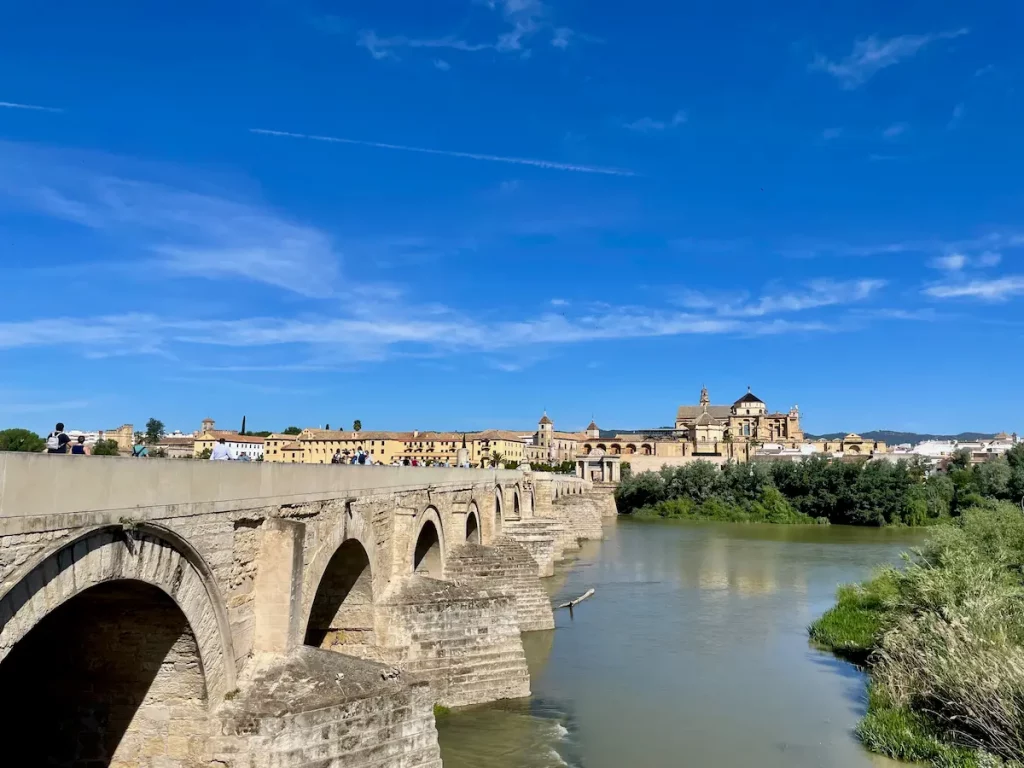
The Guadalquivir River flows through Córdoba and then through Seville. Between the cathedral and the Torre de Calahorra it is bridged by the Roman Bridge. It was built in the first century BC as part of the Via Augusta. It’s a pedestrian bridge and the view from the Torre de Calahorra is nice.
Torre de Calahorra
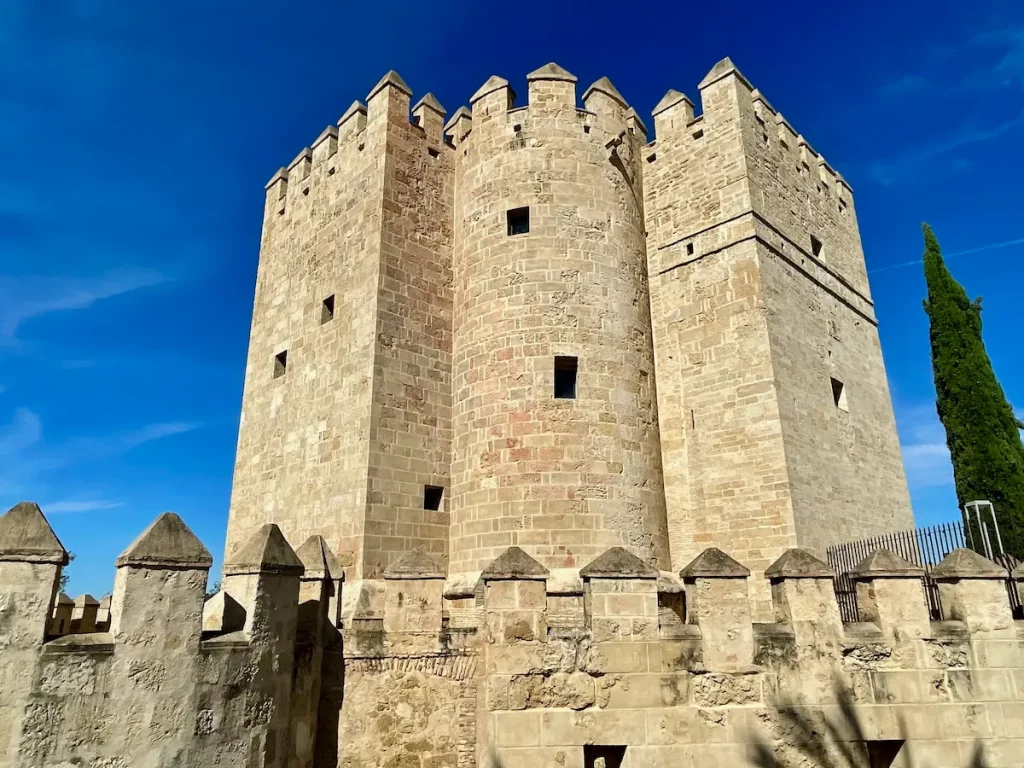
At the end of the Roman bridge is a fortress with an original defensive tower. Today there is a small museum, but the best part is the view from above of the Roman bridge, the river and the cathedral beyond. Admission is 4.50 euros.
Puerta de Almodóvar
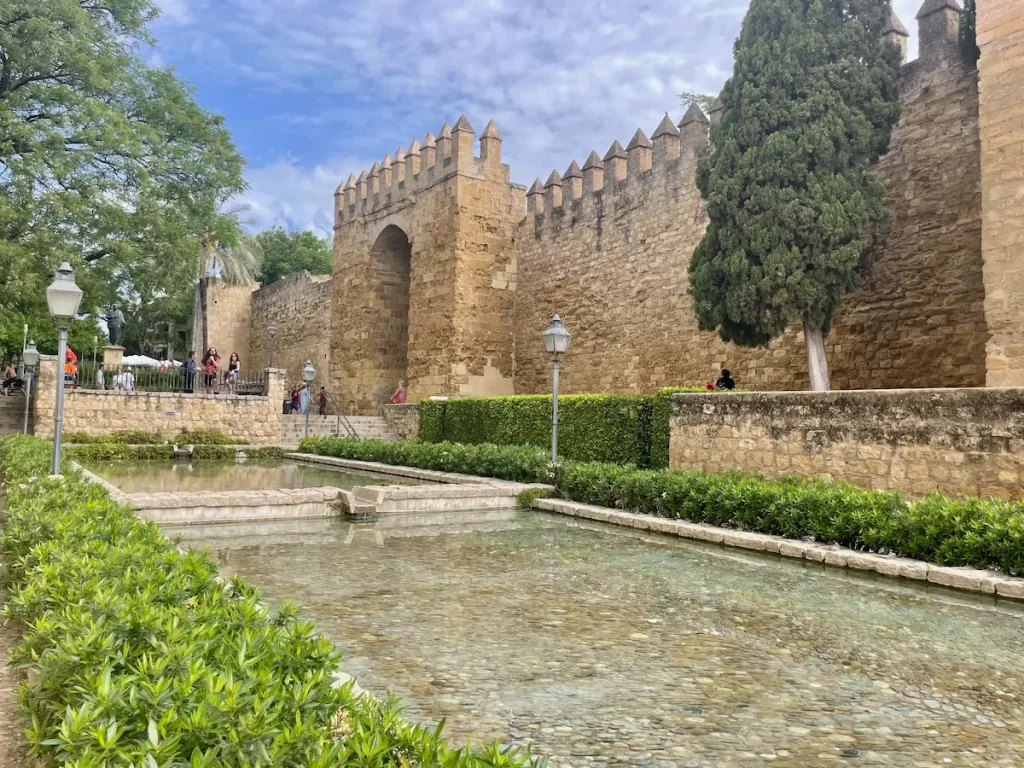
The city gate on the western edge of the historic centre was part of the original walls in the Roman Empire. Nearby is a statue of the Spanish philosopher and physician Averroes, whom you probably don’t know like me, but the locals do, he was born in the city.
What to taste in Córdoba
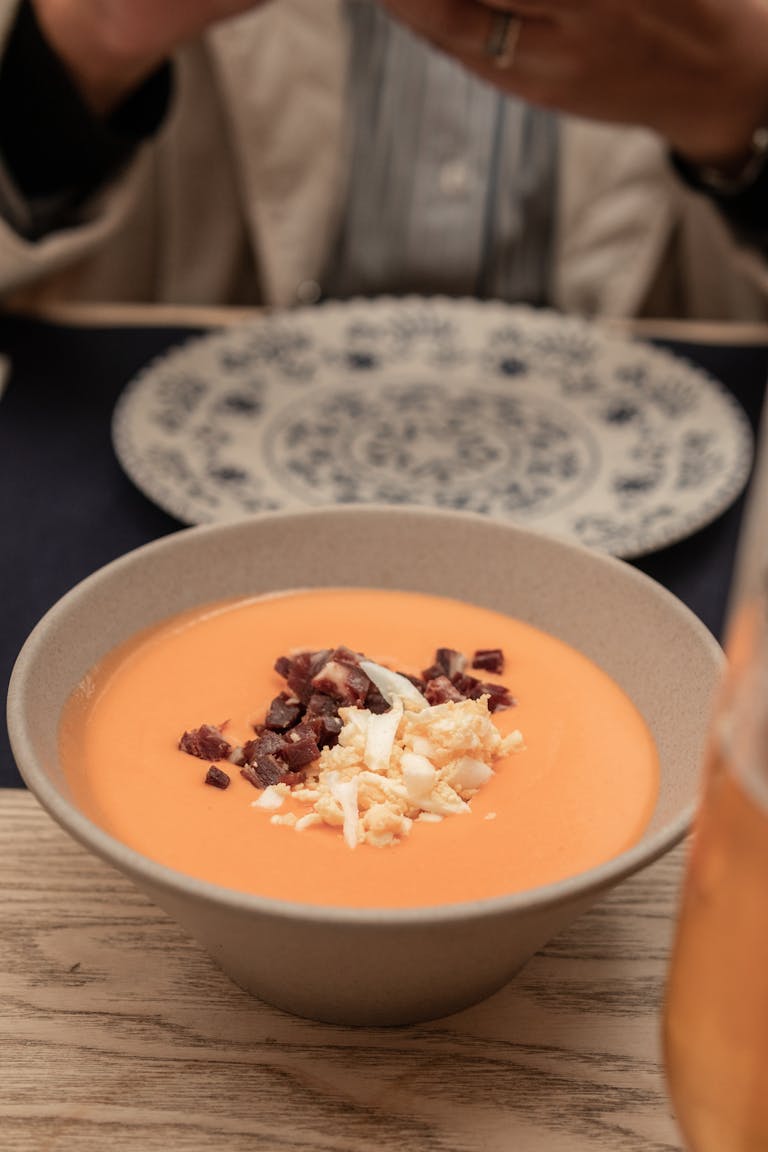
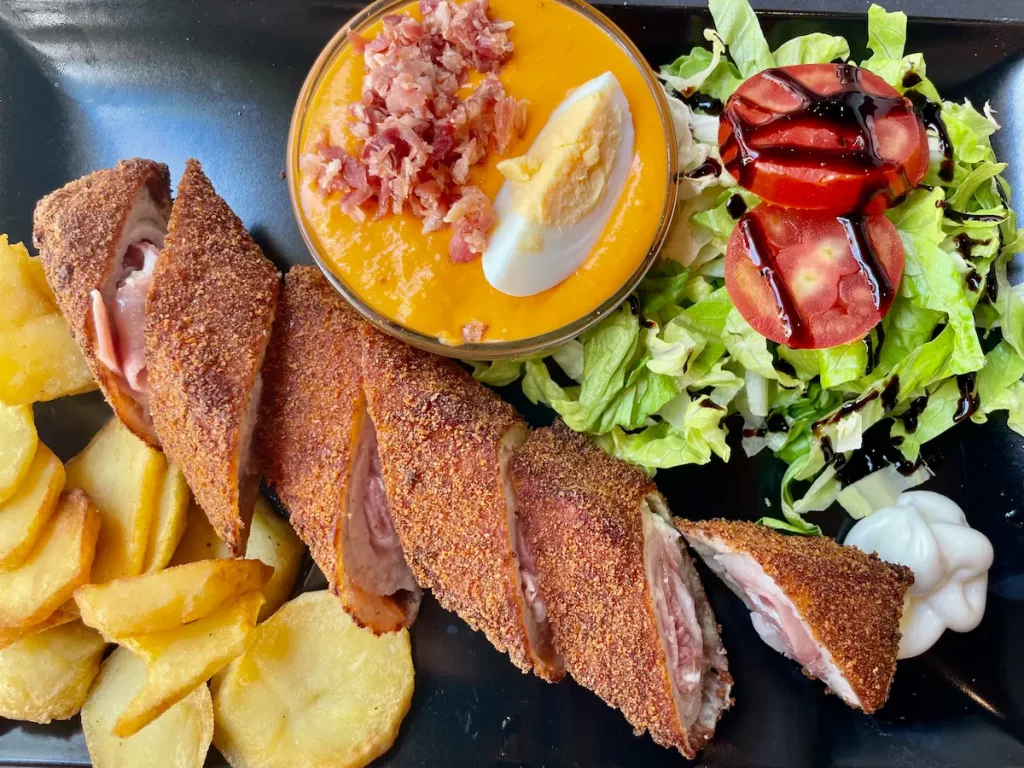
In Córdoba you can taste salmorejo, a cold tomato soup, most typically topped with sliced ham and egg, in every restaurant. In the hot summer, it offers a pleasant cooling. Another cold soup is mazamorra, a white soup garnished with olive oil, roasted almonds and raisins. It is a thick cream made from ground corn.
It is also the origin of flamenquín cordobes, which is ham wrapped in pork tenderloin, breaded and fried. It’s a kind of long cone, and it’s usually brought already cut into pieces. Bull’s tail, robo de torro, is also a local specialty, but here, besides being from the tail (usually of a cow rather than a bull, as there are few bulls), it’s just slow-braised beef.
The local dessert is pastel cordobes, a kind of cake filled with candied pumpkin jam or other jams or fruits and sprinkled with sugar and cinnamon.
Where to eat in Córdoba
I loved two places for breakfast, and I wasn’t really looking for anything else. Aromas Café Bar and La Hojuela are right next to each other in Plaza del Dr. Emilio Loque (such a small insignificant square. If you’re an early bird, both are open from 7. La Hojuela is actually a pastry shop, but they have the classic Spanish breakfast, tostadas with about 10 variations alongside the most common (with olive oil, chopped tomatoes and ham or butter and jam). They also have breaded croissants and then lots of sweet things.
The whole centre of Córdoba is dotted with restaurants, which look nice and I think that maybe the food is good everywhere. I’d just keep an eye on the prices, they can be a bit expensive in the centre, but even so I didn’t come across anything explicitly touristy or overpriced. The restaurants offer traditional Andalusian cuisine, salmorejo and flamenquín will hopefully be on the menu everywhere. As a compulsive taster, I was pleased to see that many restaurants have “medio ración” – half portions – right on the menu. Eat a whole salmorejo and I’ll have nothing else. Actually, I’m a little dubious whether it’s meant as a soup or a main dish.
Where to go on a trip from Córdoba
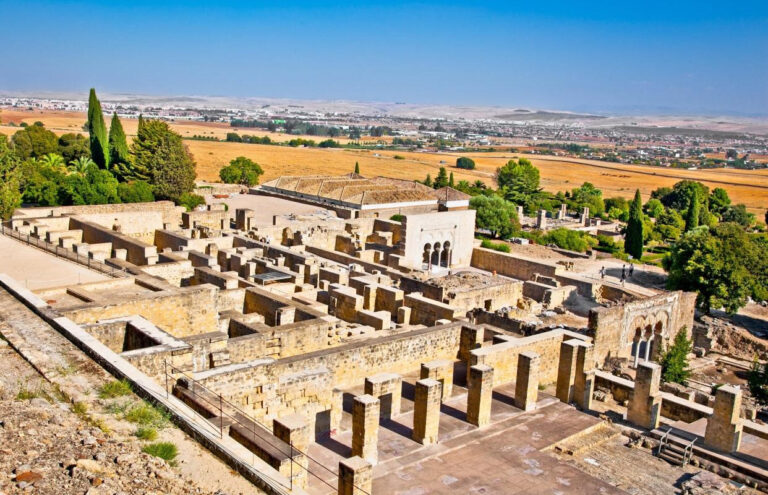
- Medina Azahara
- Granada
- Seville
- Puente Genil
- Espiel
- Pozoblanco
- Sierras Subbéticas National Park
- Castillo de Almodóvar